Quote pages and faceless content
How to Turn Your Quotes Into Print-on-Demand Products
The quotes people save are the ones they will buy on a mug or a print. How to pick them, match each one to the right product, and design for the product instead of the post.
 By Tina Alexander
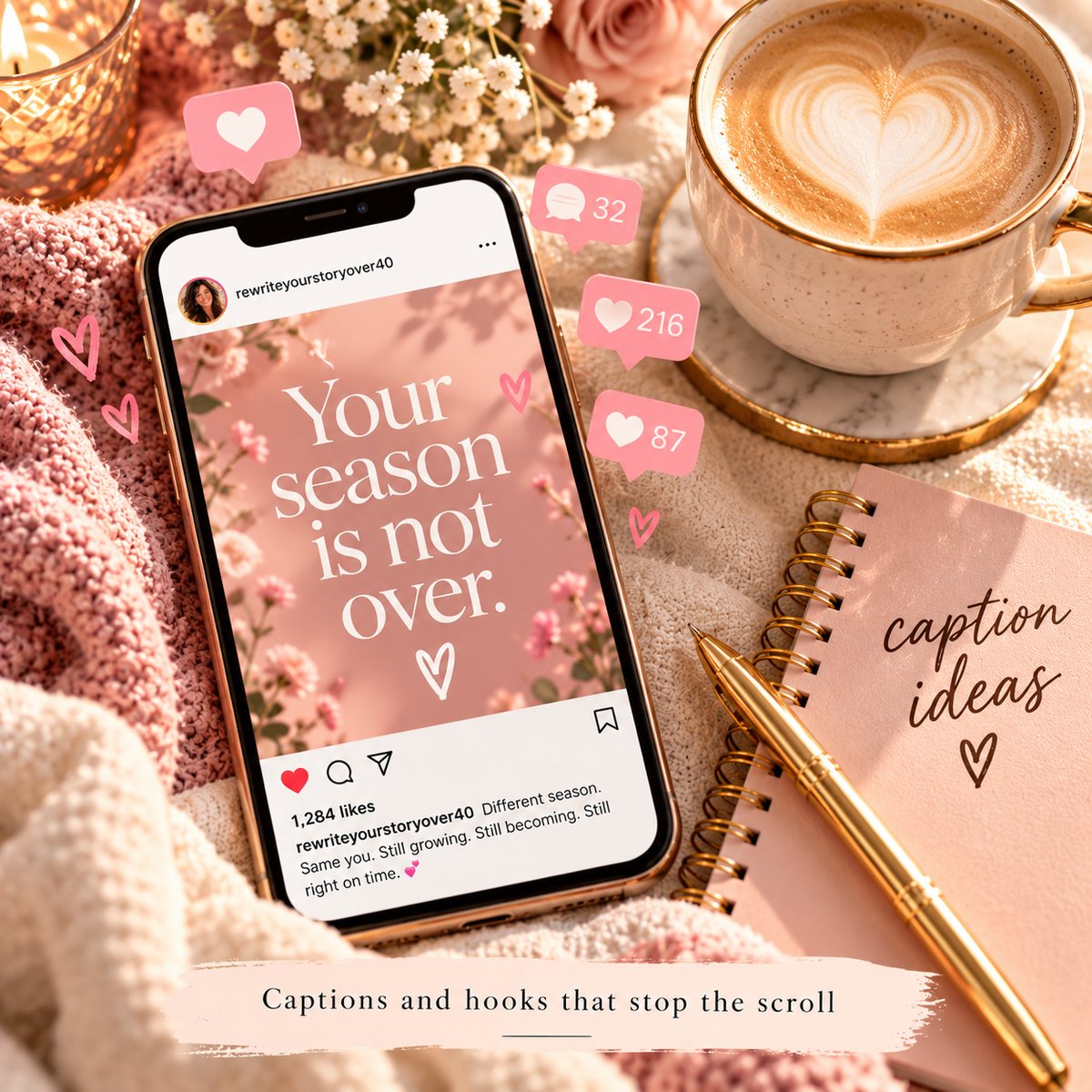
To turn a quote into a print-on-demand product, start with a quote people have already saved, match it to a product that fits the moment it describes, design it for that product rather than for a social post, and list it with a print-on-demand service. Each item is printed only when someone orders it, so there is nothing to buy upfront and nothing sitting in a box.
This is the later step in how to start a quote page. The page tells you which words people care about. The products are where those words can earn.
Start with the quotes people already saved
You do not need to guess which quotes will sell. Your page has been telling you.
Look at your posts and sort them by saves and shares, not likes. A like is a moment. A save means someone wanted to keep those words, and a person who wants to keep words is a person who might want them on a mug.
Pick your top handful. That is your first product list.
Print on demand works the same way for books as it does for mugs, which is how I publish my coloring books. If you want to see the model from that side, I wrote about it in how to publish a coloring book on Amazon.
Match the quote to the product
Every product lives in a different moment of someone's day, and the quote has to belong in that moment.
- Mugs are mornings. Short lines about starting again, getting through the day, one more cup.
- Wall art and prints are home. They can hold a longer line, because people stand in front of them and read.
- Shirts and hoodies are declarations. A few bold words someone is happy to be seen agreeing with.
- Pillows are comfort. Soft, reassuring, the kind of thing you want near you on a bad night.
- Gift items are occasions. Words for a new mother, a retirement, a friend who got through something hard.
A line that works beautifully as a print can fall flat on a shirt. Ask where someone would actually want to see these words, and put them there.
Design for the product, not the post
A square image that looks lovely on Instagram is not a product design. The product has its own shape and its own rules.
- Use the product's own template. A mug wraps around. A shirt has a print area. A print has a ratio. Start from the size the print service gives you.
- Make it readable from across a room. Fewer words, bigger type, strong contrast. A quote nobody can read from a step away does not sell.
- Use a high-resolution file. Something that looks sharp on a phone can print blurry on a large canvas.
- Leave room at the edges. Words too close to a seam, a handle or a trim line get cut or bent.
The embedded scenes from your posts, the mirror and the receipt, are for the feed. For products, the words themselves usually are the design.
Only sell words that are yours
This matters more for products than for posts. Selling a famous quote on a mug is selling someone else's words, and some of them are protected by copyright.
Short phrases can also be registered as trademarks for use on products like shirts and mugs. Before you list a line, search it in the trademark database for your country. In the US, that is the USPTO's trademark search.
Original quotes avoid most of this, which is one more reason the method in how to write original quotes is worth learning before you open a shop.
Write the listing for the person buying
A lot of quote products are gifts. The person buying is often not the person who will use it.
So say who it is for and when: a mug for a nurse coming off a night shift, a print for a friend starting over, a pillow for a new grandmother. That is what a shopper searches for, and it is what tells them this is the one.
Your listing description matters as much as the design. Words That Sell has 25 flat phrases and what to say instead.
Start small
Three quotes. Two products each. That is six listings, which is enough to learn what sells without spending weeks designing things nobody wants.
When one of them sells, make more of what it is. Let the orders decide the next product, the same way the saves decided the first.
This is the process I built Quote to Product Builder to do in one pass: quote, then design, then product, then listing, with concepts for mugs, pillows, wall art, prints, apparel and gift items. It is $9.
Questions people ask about this
Do I have to buy stock?
No. With print on demand, the item is made and shipped when someone orders it. You do not hold inventory.
Where do I sell them?
You need a shop and a print-on-demand service that fulfills the orders. Many people connect the two, for example an Etsy shop linked to a print-on-demand provider, so an order in one is printed and shipped by the other.
Can I sell famous quotes?
It is risky. Some are still under copyright, and short phrases can be trademarked for products. Selling your own original words is the safer route.
How do I price them?
Start from what the print service charges you to make and ship the item, add the fees of the platform you sell on, and then look at what similar products sell for. The price has to cover all of that and still leave something for you.
Do I need a big following first?
No, but you need some signal. Even a small page shows you which lines people save, and that is better than guessing.